
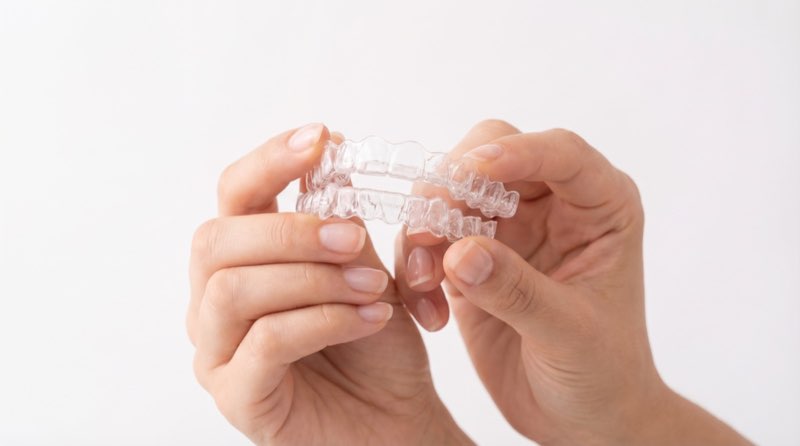
When teeth are crowded, spaced, misaligned, or the bite does not meet comfortably, orthodontics is often worth assessing before veneers. Orthodontics moves teeth and can improve how they fit together; veneers mainly change the visible front surface of teeth. At Clínica DrDiente Roma Norte, the right sequence should be decided from an individual assessment, not from a one-size-fits-all rule. Veneers may still have a role after alignment—or in a carefully selected situation—but they do not move teeth or correct a bite by themselves. This article is educational; a dental professional must assess your case.
For people in Roma Norte and nearby CDMX neighborhoods, this question is practical: you may want a more even smile, yet also want to protect long-term dental health. The useful first step is not to guess the treatment. It is to understand what each option is designed to do.
Why the order matters in Roma Norte, CDMX
Think of orthodontics and veneers as two different tools in a home project. Orthodontics is more like aligning a door frame so the door closes properly. Veneers are more like refining the visible finish of the door. Both can be valuable, but a finish cannot replace work on the frame when the underlying fit needs attention.
The American Dental Association explains that orthodontic treatment aims for a healthy bite, where teeth meet correctly, and that braces or aligners guide teeth into position. The NHS notes that braces may be considered for crowded or prominent teeth, gaps, jaw relationships that do not match well, or difficulties with chewing and cleaning. These sources support a prudent clinical inference: if tooth position or bite is a central concern, evaluating orthodontics first is often sensible. It is not a universal order for every person. ADA: orthodontics NHS: braces
Veneers are custom-made coverings that can improve the appearance of teeth that are discolored, chipped, irregularly shaped, or visually uneven. They can also help disguise some gaps. Yet their role is primarily restorative and cosmetic on the visible surface; they do not reposition teeth. ADA: veneers NHS: dental treatments
Here is the important nuance: “orthodontics first” is not a verdict made from a photo or a short description. Gum health, cavities, tooth shape, wear, clenching habits, bite design, and the amount of movement needed all matter. A plan should fit the mouth in front of the professional, not a trend on social media.
When orthodontics may be assessed before veneers
A professional may discuss orthodontics first when the issue is not only how front teeth look, but also where they sit and how they contact opposing teeth. Braces and aligners are intended to guide teeth into position; veneers can camouflage limited visual irregularities, but they cannot straighten teeth biologically or correct the bite on their own. ADA: orthodontics ADA: veneers
- Crowding or rotation: teeth overlap, twist, or do not have enough room.
- Spaces or protrusion: tooth position affects the smile or function.
- A bite concern: teeth do not contact as intended, there is a deep bite, or chewing is difficult.
- Cleaning challenges: tooth position makes daily hygiene harder.
This does not mean orthodontics will always remove the wish for veneers. Once teeth are aligned, some people may still have concerns about color, shape, chips, or wear. Others may feel that alignment alone achieves their goal. The assessment is where those possibilities become concrete.
But what if the visible concern seems small and you are hoping to avoid a longer path? That is exactly where careful planning earns its value. A conservative-looking solution is not automatically the least invasive solution if it asks veneers to compensate for a position or bite issue they were not designed to solve.
What veneers can and cannot solve
Veneers can be considered to change the appearance of the front of a tooth, including discoloration, chips, certain shape differences, or some visual unevenness. The ADA also notes important limits: veneers may require enamel removal, are not reversible, and can chip, crack, wear, or come loose. Cavities can still develop around or under a veneer. ADA: veneers
That is why a good conversation is larger than “Can veneers make my smile look straighter?” The more useful question is: what problem are we trying to solve—position, bite, tooth structure, appearance, or several of these together?
Healthy gums and teeth come first. The ADA advises treating tooth decay or gum disease before veneers because placing them over unhealthy teeth may worsen existing problems. Clenching, grinding, and a deep overbite can also make veneers unsuitable in some situations. ADA: veneers
There is another practical point. Orthodontic treatment requires thorough cleaning, follow-up visits, and retention after active treatment. The NHS explains that braces can make teeth harder to clean and that retainers are needed after treatment to help maintain the result. NHS: braces A plan works best when daily care and follow-up are realistic for your routine.
Questions to bring to your consultation
A consultation should help you make an informed decision, not pressure you into a sequence. If you are comparing orthodontics and veneers, these questions can clarify the discussion:
- Is my main concern tooth position, my bite, tooth color or shape, or a combination?
- Are my gums and teeth healthy enough for any restorative treatment now?
- Would orthodontic movement reduce the amount of restorative change needed later?
- What are the alternatives, limitations, and maintenance needs for my situation?
You can also ask what records are useful and whether the plan needs coordination between orthodontic and restorative care. If you already have veneers, do not assume they must be removed or can automatically stay in place during orthodontics. That decision cannot be made responsibly at a distance; it needs coordinated planning after an examination.
Now for the question that often changes the conversation: what happens after the teeth move? Alignment can improve position and bite relationships, but it does not automatically change every detail of color, contour, prior chips, or wear. A review after orthodontic treatment can show whether any further restorative treatment is useful—or whether it is unnecessary.
Frequently asked questions about orthodontics and veneers
Can veneers straighten my teeth instead of orthodontics?
Veneers can disguise certain small visual irregularities, but they do not move teeth or correct a bite by themselves. When crowding, spaces, alignment, or the way teeth meet is a key issue, an orthodontic assessment may be appropriate before deciding on veneers. ADA: veneers ADA: orthodontics
Will I always need veneers after orthodontics?
No. The public sources reviewed do not support veneers as a routine need after orthodontics. The answer depends on the functional and aesthetic result, plus factors such as remaining color changes, shape differences, wear, or fractures. Some people may want no restorative treatment after alignment.
When should I request an assessment?
Request an assessment when you notice crowding, spaces, prominent teeth, trouble cleaning around certain teeth, chewing concerns, or you are considering veneers to make teeth look straighter. The NHS identifies several of these as reasons braces may be considered, while the ADA explains that gum disease and decay should be addressed before veneers. NHS: braces ADA: veneers
Can I have veneers if I grind or clench my teeth?
It may affect suitability. The ADA identifies bruxism, clenching, and a deep overbite as factors that can make veneers inappropriate. An individual assessment is needed to understand the risk and discuss options; this article cannot diagnose your situation. ADA: veneers
Where can I request an assessment in Roma Norte?
You can request an appointment through the contact page or review the local clinic information at Dentist in Roma Norte. Clínica DrDiente Roma Norte is at Monterrey 147, Roma Norte, Cuauhtémoc, 06700 CDMX. Appointment requests can be made Monday through Saturday, 09:00–18:00, at +52 56 1016 7727; Sundays are closed. A request is not an appointment confirmation.
A useful next step for your smile
The choice between orthodontics and veneers is rarely just a cosmetic preference. It is a sequencing decision that should account for tooth position, bite, oral health, and the changes you actually want. When alignment or bite needs are present, orthodontics may be the first subject to assess; when the remaining concern is tooth color, shape, or a chip, veneers may be part of a later conversation.
If you are in Roma Norte or elsewhere in CDMX, request a professional assessment and bring your priorities and questions. You will leave with a clearer basis for deciding whether orthodontics, veneers, both in sequence, or neither is appropriate for you. The goal is an informed plan—not a promise made before your mouth has been evaluated.

Information from Clínica DrDiente
Aesthetic Dentistry & Oral Rehabilitation · COFEPRIS 2409132002A00145
This content is informational and is not a substitute for professional dental advice. Book an assessment for a personalized diagnosis.