
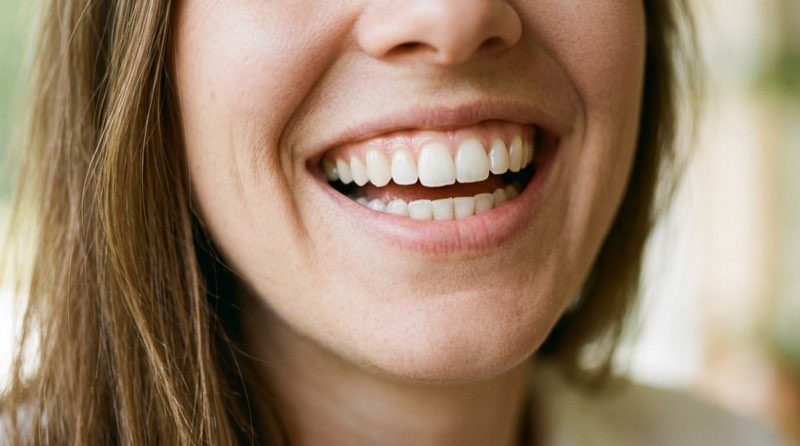
Not always. Teeth whitening may be worth considering before a smile design when your natural teeth will remain visible and their final shade will influence the color of new restorations. It does not whiten veneers, crowns, fillings, or existing prostheses. At Clínica DrDiente Roma Norte, the useful first step is an individual assessment of your oral health, existing dental work, and color goal—not assuming whitening is required for every plan.
A smile design can involve different treatments, such as resin restorations, veneers, crowns, or orthodontic planning. That is why the order of treatment is personal. Think of shade selection like choosing paint for one wall: if the adjacent walls will stay as they are, their color matters. If the whole visible area will change, whitening may play a different role.
Why whitening can matter before a smile design in Roma Norte
Whitening agents break down stains so the natural tooth color can appear lighter. Results vary from person to person: yellow-toned teeth tend to respond better than brown-toned teeth, while gray discoloration may respond less predictably. Whitening may also be less effective when discoloration is related to certain medicines or dental trauma. These are reasons to assess the cause of the color change before selecting a treatment sequence. The ADA’s MouthHealthy guidance explains these limits.
The central point is simple: whitening acts on natural tooth structure, not on restorative materials. A veneer, crown, implant restoration, denture, or filling that is already in place will not become lighter with whitening. If neighboring natural teeth change shade, the difference can become more noticeable. NHS guidance on teeth whitening also notes that restorations do not change color.
Whitening is therefore a planning conversation, not an automatic preliminary step. The professional can assess which teeth will remain natural and visible, which restorations may be replaced, and whether a lighter natural shade supports your intended result.
Here is the part that often changes the decision: a smile design is not one identical procedure. A plan involving a small resin restoration is different from one involving several new veneers, and both are different from a plan where alignment or gum health needs attention first. Once that distinction is clear, the apparent “rule” about whitening becomes a question with a more useful answer: what role will your own teeth play in the final smile?
When whitening may be useful—and when it may not be the priority
Whitening may be useful before shade selection when visible natural teeth will be part of the final appearance. For example, if only some front teeth will receive new restorations and adjacent teeth will remain natural, discussing whitening first can help the team evaluate a more consistent color target. This does not guarantee a particular shade; it helps plan around the shade that your natural teeth can reach.
It may be less relevant when all visible surfaces are planned for new restorations, though the decision still belongs in the assessment. Existing restorations cannot be whitened, so their condition, position, and color remain part of the overall conversation. A 2025 systematic review of “monochromatic” resins found acceptable color matching after whitening in most in vitro studies, but the studies had moderate-to-low quality and results varied by protocol. Laboratory findings cannot assure the clinical result of a particular resin or smile design. Read the systematic review on PubMed.
Before focusing on brightness, oral health needs to be reviewed. Whitening is not generally recommended on unhealthy teeth or gums, and the NHS advises a professional examination first. It also advises against whitening for people under 18 and during pregnancy or breastfeeding. See the NHS safety information.
- Ask whether your visible natural teeth will remain part of the final smile.
- Review fillings, crowns, veneers, and other restorations that will not lighten.
- Discuss the cause of discoloration and how predictable whitening may be.
- Confirm that teeth and gums are suitable before considering whitening.
A brighter result can sound like the whole goal, but harmony is usually the more practical goal. Natural teeth have subtle variations, curves, and texture; a planned shade should make sense alongside the lips, gums, and remaining teeth rather than follow a one-size-fits-all idea of white.
What to expect from whitening before choosing a final shade
Whitening does not deliver the same change for everyone, and it is not permanent. The NHS states that the effect may last around three years when following dental advice, although individual results and maintenance needs differ. NHS guidance. For that reason, a treatment plan should separate what whitening can change from what only a restoration can change.
Temporary sensitivity can occur. The ADA notes that peroxide may irritate the dental nerve, and excessive use can harm enamel or gums. The NHS also lists sensitivity to cold or sweet foods, gum or throat discomfort, and temporary white patches on the gums among possible effects. ADA information; NHS information.
Do not treat sensitivity as a detail to ignore. It is information to share during the assessment so the clinician can decide whether whitening fits your situation and how it should be approached. This article is educational and cannot diagnose an individual case; the professional evaluating you is responsible for recommendations specific to your teeth and gums.
There is also a useful limit to keep in mind. Research on how whitening affects restorative materials has largely been conducted in laboratory conditions. An earlier review found possible effects on materials in in vitro studies, but did not report that existing restorations must be renewed in clinical conditions. Read the review on PubMed. In other words, a general article cannot decide whether a particular restoration should stay, be adjusted, or be replaced.
So what should you do with that uncertainty? Bring it into the consultation. A careful plan makes room for health, the visible teeth, the restorations you already have, and the realistic range of color change. That is much more helpful than committing to whitening before anyone has looked at the full picture.
Questions to ask at a Roma Norte smile-design consultation
A good consultation is a two-way conversation. You do not need dental terminology to ask clear, useful questions. Start with your goal—perhaps you want a lighter look, less contrast between teeth, or a more natural-looking shade—and then ask how the plan accounts for the teeth and restorations you already have.
- Which of my visible teeth will remain natural after treatment?
- Would whitening change the match with my current fillings, crowns, or veneers?
- What is causing my discoloration, and how might that affect the response?
- Are my teeth and gums healthy enough to consider whitening now?
You can also ask when the final shade would be chosen and what would happen if a pre-existing restoration no longer matches. These questions do not presume a treatment; they give you a way to understand the sequence and make an informed decision.
If your priority is a natural result, say so plainly. Shade is only one element of a smile design. The proportions of the teeth, the bite, gum health, and the materials considered all affect the plan. The assessment is where those pieces are connected.
Frequently asked questions about whitening and smile design in CDMX
Do I have to whiten before getting new veneers?
No. If natural teeth will remain visible next to the new veneers, whitening may be worth discussing before the veneer shade is selected. If the visible surfaces will all be restored, its usefulness may be different. Existing veneers do not whiten, as confirmed by ADA MouthHealthy.
Can whitening lighten an old filling, crown, or veneer?
No. Whitening does not change the shade of existing fillings, crowns, or veneers. The assessment can determine whether the contrast with natural teeth is relevant to your plan. NHS guidance.
Will whitening give every tooth the same shade?
Not necessarily. Response varies with the original tooth color and the cause of discoloration. Yellow-toned teeth may respond better than brown-toned teeth, while gray discoloration can be less responsive. ADA MouthHealthy.
Can I whiten if I have sensitive teeth or gum concerns?
Ask for an assessment first. Whitening can cause temporary sensitivity and may irritate gums, while unhealthy teeth or gums should be evaluated before whitening is considered. NHS guidance.
Is the whitening result permanent?
No. The NHS says whitening effects are not permanent and may last around three years when dental advice is followed. Your situation can vary, so a clinician can explain what this means for your treatment plan. NHS guidance.
How and where can I request a smile-design assessment in Roma Norte?
You can request an assessment with Clínica DrDiente Roma Norte at Monterrey 147, Roma Norte, Cuauhtémoc, 06700 CDMX, or through the contact page. You may also call +52 56 1016 7727. Hours are Monday to Saturday, 09:00–18:00; Sunday is closed. A request for an appointment is not a confirmation of an appointment.
A practical next step for your smile design
If you are considering whitening before a smile design in CDMX, the direct answer remains: it can be useful, but it is not mandatory for everyone. Ask whether natural teeth will remain visible, how existing restorations affect the color plan, and whether your oral health is ready for whitening.
Bring any questions about sensitivity, prior restorations, and your preferred level of brightness to the assessment. That conversation can turn a broad cosmetic goal into a plan that respects your dental health and the role each tooth will have in the final result. To start, request your consultation with Clínica DrDiente Roma Norte.

Information from Clínica DrDiente
Aesthetic Dentistry & Oral Rehabilitation · COFEPRIS 2409132002A00145
This content is informational and is not a substitute for professional dental advice. Book an assessment for a personalized diagnosis.