
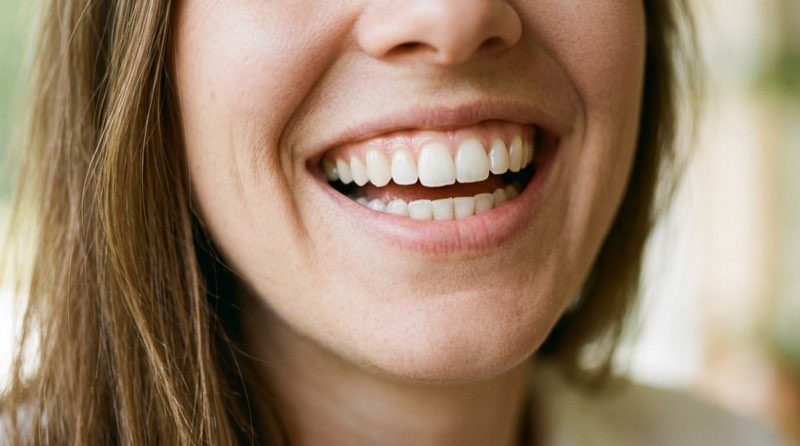
Tooth size is chosen by looking at the whole mouth, not by applying one universal measurement. When planning a restoration, orthodontic treatment or a prosthesis, a professional considers the relationship between teeth, available space, bite, function and the appearance you hope to achieve. At Clínica DrDiente Roma Norte, an in-person evaluation can help put those pieces in context. A mathematical proportion or a facial feature may offer a starting reference, but neither can determine the right size on its own.
If you are considering a smile change in Roma Norte, CDMX, this information can help you prepare for a useful conversation. It is educational, not an individual diagnosis: the appropriate assessment for your case belongs to the dental professional who examines you.
Why tooth size is more than a cosmetic detail in CDMX
It is natural to focus first on what you see in a photo: whether front teeth seem too long, too short, too wide or too narrow. Yet teeth work as a group. Their size and shape relate to how the lips frame the smile, how the upper and lower teeth meet, how much room is available and how speech and chewing feel.
Think of a bookshelf. Choosing a book simply because its cover looks good does not tell you whether it fits the shelf or works with the books around it. In a similar way, a tooth shape that looks appealing in isolation may need to be assessed alongside neighboring teeth and the bite. This does not mean there is one “correct” smile. It means that appearance and function deserve to be considered together.
Natural teeth also vary. The National Institute of Dental and Craniofacial Research explains that genetic, environmental and nutritional factors, as well as illness or injury during development, can influence dental developmental defects. These differences may involve tooth size, shape, number or position. A smaller or differently shaped tooth is therefore not, by itself, enough information to decide that treatment is needed. NIDCR’s Oral Health in America report
Here is the question many people ask next: could a simple formula settle it? It would be convenient, but the evidence points to a more personal answer.
What guides the choice of tooth size in Roma Norte?
A consultation is an opportunity to turn a broad wish—such as “I want my front teeth to look more balanced”—into questions that can be examined clinically. The aim is not to make every smile look alike. It is to understand which factors matter in that particular mouth.
- Tooth proportions: how the visible width and length of each tooth relate to nearby teeth.
- Bite and function: how upper and lower teeth meet, plus considerations related to speaking and chewing.
- Space and support: the room available, tooth position and the tissues that support the teeth.
- Personal goals: the changes you notice and the result you would like to discuss.
A systematic review of dental proportions found substantial variation in natural teeth and did not support a single formula, including the so-called golden proportion, as a reliable predictor of an aesthetic outcome. Its practical message is straightforward: proportion tools can inform a discussion, but treatment decisions should be individualized. Read the systematic review on PubMed
This is why an image online can be useful for communicating a preference but cannot replace an assessment. A photograph may not show the bite, the available space, wear, speech-related factors or the condition of supporting tissues. It is like judging the fit of shoes from a picture: the style can be visible, but comfort and fit require more information.
That distinction often brings up another concern: can the face tell you exactly how large the teeth should be? Facial measurements may offer a clue in certain situations, particularly when complete dentures are being planned, but they are not a universal answer.
Can facial measurements or the golden proportion choose the right size?
Facial features can contribute to an initial estimate in some prosthetic planning. One study of 125 Thai adults found associations between particular facial and dental measurements; when vertical dimensions were included, the model explained up to 44.4% of the variation. The study used a specific population and two-dimensional photographs, so its findings do not establish one equation for every person or clinical situation. Read the study on PubMed
That limitation matters. A reference point is not a verdict. The nose, eyes or face may be part of a broader visual assessment, but they do not create a universal tooth-size rule. The same applies to the golden proportion: it may be discussed as a design concept, yet current evidence does not show that it consistently predicts an aesthetic smile for everyone. Systematic review of dental proportions
The useful goal is harmony, not obedience to a formula. A good question is not “Which number proves the perfect size?” but “Which size and shape can be evaluated in relation to my teeth, bite, space and goals?” That change in question makes the consultation more grounded.
There is also a practical reason to slow down. Selecting a size only from a formula, a single selfie or an aesthetic preference may leave out factors that influence everyday use of the teeth. The next step is knowing what to bring up in the room.
What should you ask during a tooth-size consultation?
You do not need dental vocabulary to participate well in an evaluation. Clear, everyday questions are enough. If you are visiting from or near Roma Norte, you can use the appointment to ask how the proposed approach relates to your own mouth rather than to a generic template.
- What are you evaluating besides the visible length and width of my front teeth?
- How do my bite, available space and tooth positions affect the size or shape being considered?
- Are there health or alignment issues that should be addressed before an aesthetic change is considered?
- What are the limits of using my facial proportions or a photo as a guide?
It can also help to describe what you are seeing rather than asking for a fixed number. For example, you might say that one front tooth seems shorter in photographs, or that you want to understand whether a more balanced appearance is possible to discuss. This gives the professional a starting point without assuming the answer beforehand.
If you have images that illustrate your preference, they can support the conversation. They should be treated as visual references, not as a prescription. The final clinical discussion may identify factors a picture cannot reveal.
And what if a tooth seems unusually small? That question deserves a calm answer: variation exists, and an individual recommendation cannot be made from general information alone.
Frequently asked questions about tooth size and Roma Norte appointments
Does the golden proportion determine the correct tooth size?
No. A systematic review found no support for one formula, including the golden proportion, reliably predicting an aesthetic result. It may be a reference in conversation, but it should not replace an individualized assessment of proportions, function and goals. Systematic review on PubMed
Can tooth size be chosen from the face?
Facial measurements may provide an initial reference in complete-denture planning, but the available research is limited to particular settings and populations. They do not replace a personal evaluation or establish a universal equation for tooth size. Facial and dental measurement study
Does a small tooth always need treatment?
Not necessarily. Tooth size and shape can vary during development. Whether any treatment is appropriate depends on an individual assessment, including health, function, position and the person’s concerns. NIDCR report on developmental differences
Why can’t a photo alone determine the right size?
A photo can show a visible preference, but it may not show the bite, available space, wear, speech-related considerations or supporting tissues. It is helpful as part of a conversation, not as the sole basis for a clinical decision.
How and where can I request an evaluation in Roma Norte?
You can request an evaluation with Clínica DrDiente Roma Norte at Monterrey 147, Roma Norte, Cuauhtémoc, 06700 CDMX. Use the contact page to request an appointment or call +52 56 1016 7727. Hours are Monday through Saturday, 09:00–18:00; the clinic is closed Sunday. An appointment request is not an appointment confirmation.
When is it sensible to request a professional evaluation?
Consider requesting one when you are weighing a restoration, orthodontic treatment or a prosthesis and want to understand how tooth proportions relate to your bite, space and goals. It is also reasonable to ask when a visible difference in size or shape concerns you. General educational information cannot determine the cause or the appropriate next step for an individual.
A practical next step for your smile questions in CDMX
There is no universally perfect tooth size waiting to be found by a ruler or a filter. The more useful path is an individualized conversation that considers proportions alongside bite, space, function and the look you hope to achieve. Research supports that careful approach: natural variation is considerable, and no single aesthetic formula reliably fits everyone. Review the evidence on dental proportions
If you would like to discuss tooth size in the context of your own smile, request a visit through Clínica DrDiente Roma Norte’s contact page. Bring your questions, any visual references that help explain your goals, and the willingness to explore the full picture. The evaluation is where general information becomes a professional, case-specific conversation.

Information from Clínica DrDiente
Aesthetic Dentistry & Oral Rehabilitation · COFEPRIS 2409132002A00145
This content is informational and is not a substitute for professional dental advice. Book an assessment for a personalized diagnosis.