
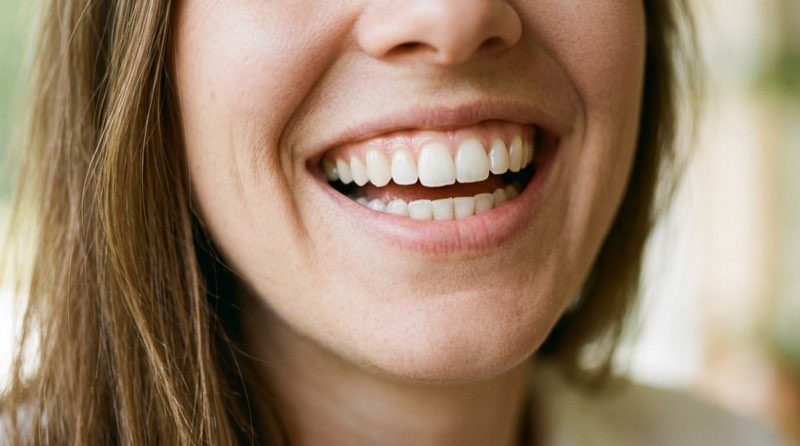
A natural smile is not about reaching the brightest possible white. It is about reducing discoloration when appropriate while preserving harmony with your own teeth, complexion, and existing dental work. At Clínica DrDiente Roma Norte, the useful starting point is an individual assessment: healthy smiles naturally come in many shades, and a lighter result does not need to look artificial. The American Dental Association notes that healthy smiles exist across many tones. ADA/MouthHealthy
If you are considering whitening in Roma Norte, CDMX, the goal is usually not a single “perfect” color. Think of it like choosing a paint color for a room: a sample can look very different once it sits next to the light, materials, and colors already in the space. Your natural enamel, gums, restorations, and the reason behind the color all matter. This article is educational; a dental professional should assess your individual situation.
Why a natural shade matters in Roma Norte, CDMX
Teeth are not meant to be identical blocks of white. Natural teeth can have small variations in shade, translucency, and texture. A balanced approach recognizes that a healthy-looking smile is often one that still looks like it belongs to you. Whitening may make teeth appear lighter, but it does not create the same result for every type of discoloration. ADA/MouthHealthy
This matters because a color concern can have different origins. Surface stains, changes within the tooth, age-related shifts, dental materials, medication-related discoloration, and a past injury may not respond in the same way. The ADA explains that yellow teeth may respond better than brown teeth, while gray teeth may not respond; color changes connected with medications or trauma also may not be corrected by whitening. ADA/MouthHealthy
A realistic objective is a healthier-looking, harmonious shade—not a promise of a particular shade. That distinction can make the conversation calmer and more useful. It also helps avoid comparing your mouth to heavily edited images or to someone whose enamel and dental history are completely different from yours.
There is another detail worth knowing before choosing any option: whitening does not lighten crowns, veneers, fillings, implants, or dentures in the way it lightens natural teeth. ADA/MouthHealthy If you have visible restorations, their current shade belongs in the planning conversation.
What whitening can and cannot change
Many whitening products use hydrogen peroxide or carbamide peroxide. These ingredients break stains into smaller particles, which can reduce how concentrated the discoloration appears. ADA/MouthHealthy That mechanism explains why whitening can help some people, but it does not mean every product, concentration, or routine is interchangeable.
A Cochrane review indexed in PubMed found that chemical at-home whitening methods made teeth lighter than placebo in the short term. At the same time, the certainty of the evidence was low or very low, and the review could not determine which composition, concentration, method, duration, or application time was superior. PubMed: Cochrane review In plain terms, “stronger” or “more popular” is not automatically “better” for a particular mouth.
- Whitening may help: some discoloration in natural teeth.
- Whitening does not lighten: crowns, veneers, fillings, implants, or dentures.
- Whitening is not permanent: the NHS notes that, when used as directed by a dentist, the effect may last around three years.
- Whitening is not a diagnosis: a color change should be assessed in context. NHS
Here is the question that often changes the whole plan: what if the desired brightness is not the only concern? If there is gum bleeding, discomfort, decay, a changing dark tooth, or a restoration that does not match, choosing a shade first may skip the more important step. An assessment can clarify the sequence before any aesthetic decision is made.
How to keep the result looking believable
A natural-looking smile is usually a matter of proportion and context. Rather than asking for the whitest possible result, try describing the look you want: fresher, less yellow, more even, or more harmonious with your facial features. This gives the conversation a practical direction without turning a shade into a rigid promise.
It can also help to separate the appearance of natural enamel from the appearance of a restoration. Teeth have curves and subtle visual variation; they are not uniform squares. If veneers or other restorative options are ever discussed, the health of teeth and gums, bite, tooth alignment, and existing restorations should be considered before deciding on an aesthetic change. A consultation is where those factors can be reviewed for your case.
Do not assume that products described as “natural” are gentler or more effective. The ADA reports that there is no reliable evidence that activated charcoal is safe and effective for whitening, or that oil pulling or turmeric whiten teeth. Acidic home remedies such as lemon or vinegar can erode enamel, and abrasive approaches can wear it down and expose the more yellow dentin underneath. ADA/MouthHealthy
A simple analogy is polishing a window: careful cleaning can improve what you see through it, but harsh scrubbing can damage the glass. Enamel deserves the same restraint. A professional assessment does not guarantee a specific cosmetic outcome; it helps identify options and limitations more safely.
Questions to bring to your dental assessment
Preparing a few questions can turn an aesthetic concern into a clearer clinical conversation. If you would like an assessment in the area, you can request one through our Roma Norte dentist page or contact us. The clinic is located at Monterrey 147, Roma Norte, Cuauhtémoc, 06700 CDMX. Appointment requests are not confirmations; availability should be confirmed by the clinic.
- What may be causing my current tooth color, and is whitening likely to address it?
- Do I have crowns, fillings, veneers, or other visible materials that will not change color?
- Are my teeth and gums suitable for considering whitening now, or should another issue be addressed first?
- What level of change is realistic if I want a natural-looking result?
It is also reasonable to mention past sensitivity, gum discomfort, tooth pain, an injury to a tooth, or previous dental work. Whitening can cause tooth sensitivity and oral irritation; in the Cochrane review, these effects were more common at higher concentrations, although they were usually mild and temporary in the studies reviewed. PubMed: Cochrane review The NHS also lists sensitivity to cold or sweet foods, gum or throat pain, and white patches on the gums among possible issues. NHS
When to request an assessment in Roma Norte
Request an assessment before whitening if you are unsure why your teeth changed color, have restorations you would like to match, or have experienced sensitivity or gum symptoms. The NHS advises that whitening is not performed for people under 18 or when teeth or gums are unhealthy, and it is not recommended during pregnancy or breastfeeding. NHS
It is particularly sensible to seek a timely evaluation if a single tooth becomes darker, if you notice persistent pain, or if gums are swollen or bleed. These signs do not establish a diagnosis on their own, but they are reasons to let a professional evaluate the situation rather than attempting to cover it with a whitening product.
So, what is the practical next step if you simply want a brighter but believable smile? Start with the reason for the color and the condition of your mouth. That is more useful than chasing a universally white target, and it leaves room for a plan that respects your natural features.
Can I get a natural smile without making my teeth extremely white?
Yes. A natural goal can focus on reducing visible discoloration and maintaining harmony with your own tooth shade instead of pursuing an artificial-looking white. Healthy teeth come in many tones, according to the ADA. ADA/MouthHealthy What is suitable for you should be determined during an assessment.
Do whitening toothpastes change the inner color of teeth?
Whitening toothpastes mainly work on surface stains. The ADA explains that products accepted for stain removal do not change the tooth’s intrinsic color. ADA/MouthHealthy They should not be treated as a substitute for evaluating an unexplained color change.
Will whitening make my veneers, crowns, or fillings lighter?
No. Whitening does not lighten veneers, crowns, fillings, implants, dentures, or other restorations like it does natural teeth. ADA/MouthHealthy If matching is a concern, bring it up before making aesthetic decisions.
Is it safe to whiten with charcoal, turmeric, lemon, or vinegar?
The ADA states that reliable evidence is lacking for activated charcoal’s safety and effectiveness in whitening, and for oil pulling or turmeric as whitening methods. Acidic options such as lemon and vinegar can erode enamel; abrasives can cause wear. ADA/MouthHealthy
Where and how can I request a whitening assessment in Roma Norte?
You can request an assessment through the contact page or visit Clínica DrDiente Roma Norte information. The address is Monterrey 147, Roma Norte, Cuauhtémoc, 06700 CDMX, and the clinic’s stated hours are Monday through Saturday, 09:00–18:00; it is closed Sunday. A request for an appointment is not confirmation.
A naturally brighter smile begins with an honest question: what can safely change, and what should be evaluated first? If you are in Roma Norte or nearby CDMX, request a consultation to discuss your goals, dental history, and the limits that matter for your own smile.
To request an appointment in Roma Norte, call +52 56 1016 7727.

Information from Clínica DrDiente
Aesthetic Dentistry & Oral Rehabilitation · COFEPRIS 2409132002A00145
This content is informational and is not a substitute for professional dental advice. Book an assessment for a personalized diagnosis.