
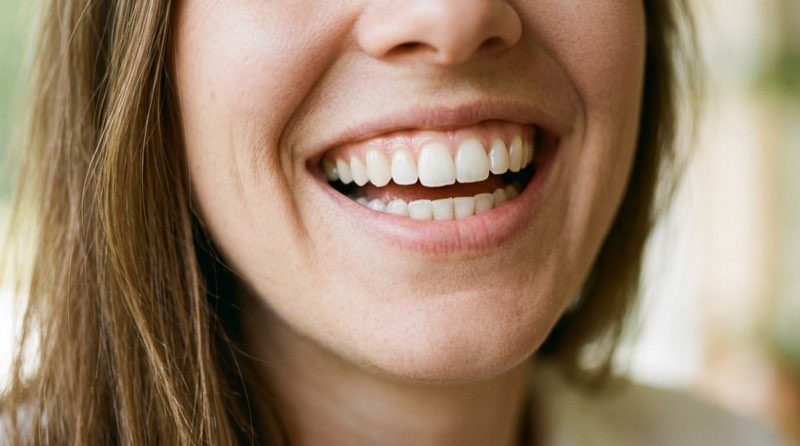
No single tooth shape has been proven to make every face look younger. Oval, square, and triangular teeth can each look harmonious when their proportions, the gumline, bite, lips, and facial features are considered together. At Clínica DrDiente Roma Norte, a smile-design assessment can help turn a broad aesthetic wish into questions that are safe and specific to your mouth. This is educational information; only a dental professional can assess your individual case.
If you are asking because you want a fresher, less tired-looking smile, the useful question is not “Which shape rejuvenates everyone?” It is “Which changes, if any, respect my dental health, function, and natural features?” Think of tooth shape as one piece of a portrait, not the whole portrait. A frame can complement a picture, but it cannot replace the picture itself.
Why tooth shape is not a universal shortcut to a younger-looking face
It is understandable to notice rounded incisors, softer corners, or more even edges and connect them with youthfulness. Yet that connection is a preference or an impression, not a universal clinical rule. An observational study found associations between upper central-incisor shape, age, sex, and other smile characteristics; oval incisors were common in that sample. It did not show that making teeth oval causes a person to look younger. Read the PubMed study on age, gender, and smile characterization.
Another study of smile perception found that the observer’s age influenced attractiveness judgments. Gingival display and dark spaces between incisors affected ratings, while the position of the central-incisor edge did not distinguish ratings across the age groups studied. In other words, viewers do not evaluate a smile by one outline alone. Read the PubMed study on smile-esthetic perception.
There is an extra layer: perceived age is not the same as dental health, and it is not measured by one feature. Research using facial photographs found that a smile could be judged older than a neutral expression in that setting, possibly because smiling makes eye-area lines more visible. It does not evaluate dental treatment, but it is a useful reminder that facial age perception is complex. Read the PubMed study on smiling and perceived age.
The practical takeaway: a shape should be discussed as part of a whole smile and face, never as a guaranteed anti-aging formula.
So, does that mean shape does not matter at all? Not quite. It can matter visually, but its role is more like seasoning in a meal: important for the final impression, yet not a substitute for sound ingredients and balance.
What a balanced smile-design conversation can consider in Roma Norte
A thoughtful assessment starts with what is already present rather than choosing a trend from a chart. Tooth proportions, symmetry, wear patterns, tooth position, gum health, bite, visible gum tissue, and your own goals may all affect whether a proposed change is appropriate. A result that looks natural often respects subtle curves and texture instead of making every tooth identical or overly geometric.
For example, a softer contour may suit one person’s facial features, while another person may prefer or naturally have more defined edges. Neither is inherently younger. Teeth are not perfectly square blocks; natural teeth usually have variation in contour, light reflection, and texture. The goal of a consultation is to understand whether a proposed shape supports a coherent smile, not to force a face into a template.
Health and function come first. The American Dental Association notes that veneers may change tooth shape, size, color, and sometimes apparent position, but treatment is not reversible when enamel must be removed. Veneers can also chip, wear, or come loose, and bruxism, clenching, or a deep overbite can make them less suitable. Read the ADA overview of veneers.
The same ADA resource advises treating cavities and gum disease before veneers are considered. This is important because an aesthetic plan should rest on stable oral health, much as paint holds best on a repaired wall rather than one with moisture underneath. Read the ADA guidance on dental health before veneers.
A planning discussion or a reversible simulation may be worth asking about when clinically feasible. It can help you communicate preferences and understand proportions before making an irreversible decision. It is not a guarantee of a final result, and it does not replace an examination of your teeth, gums, and bite.
Questions to ask during a smile consultation in CDMX
Clear questions can make an aesthetic consultation calmer and more useful. Rather than arriving with a fixed request for “younger teeth,” describe what you notice in your smile and what you hope will feel different. Then invite the professional to explain the tradeoffs in plain language.
- What is contributing most to my concern: tooth shape, wear, color, alignment, gum display, or something else?
- Are my teeth, gums, and bite healthy enough for an aesthetic change now, or should something be addressed first?
- Would changing the shape require removing enamel, and what does that mean for my particular teeth?
- What conservative or reversible options, if any, could help me understand the proposed change?
You can also ask how the proposal accounts for function. A smile is not only seen in photos; it is used to bite, speak, laugh, and eat every day. This question is especially relevant if you grind or clench your teeth, have noticed chipping, or have been told you have a bite concern. The ADA specifically identifies bruxism, clenching, and deep overbite as factors that may make veneers unsuitable for some people. See the ADA information on veneer suitability.
There is another practical point worth raising: maintenance. An NHS patient resource explains that treatment involving crowns, veneers, or bridges may involve removal of tooth surface; gum recession can occur, some teeth may later require root-canal treatment, and restorations can need maintenance or replacement. These are general possibilities, not predictions about any individual. Read the NHS information on crowns, veneers, and bridges.
A good consultation leaves room for “not yet” or “not appropriate.” That answer can protect your health and help you make a better-informed choice.
FAQ: choosing a tooth shape that feels natural
Do oval teeth make you look younger?
Not as a proven rule. Oval upper central incisors were frequent in one observational study, but that study did not demonstrate that creating an oval shape makes someone look younger. What looks harmonious depends on many details, including the face, gums, tooth proportions, expression, and the observer. See the study on smile characterization.
Are square teeth less flattering as we age?
There is no reliable evidence that square teeth are universally less flattering with age. A more angular or a softer contour can be appropriate depending on the person and the condition of the teeth. A clinician should assess whether a proposed contour preserves function and fits your overall smile rather than applying an age-based label.
Can veneers change the shape of my teeth?
Veneers can change shape, size, color, and sometimes the apparent position of a tooth. However, if enamel removal is needed, the treatment is not reversible. They may chip, wear, or detach, so the decision deserves an examination and a conversation about alternatives, risks, and long-term care. Read the ADA overview of veneers.
Can I change tooth shape if I have cavities or bleeding gums?
Dental disease should be addressed first. The ADA advises treating cavities and gum disease before veneer treatment. Bleeding gums or other symptoms deserve professional evaluation; they should not be covered by an aesthetic plan. Read the ADA guidance on treatment timing.
Can I preview a different tooth shape before deciding?
Ask whether diagnostic planning or a reversible simulation is clinically feasible for you. A preview can support communication about preferences, but it cannot promise an outcome and does not replace a complete evaluation. Your dentist can explain what the preview can and cannot show in your circumstances.
Where can I request an assessment in Roma Norte?
You can request an assessment with Clínica DrDiente Roma Norte, located at Monterrey 147, Roma Norte, Cuauhtémoc, 06700 CDMX. You may also use the contact page to request an appointment or call +52 56 1016 7727. Hours are Monday through Saturday, 09:00–18:00; closed Sundays. An appointment request is not an appointment confirmation.
When to request a professional assessment
Consider requesting a valuation when you are thinking about changing tooth shape, especially before any irreversible treatment. It is also sensible to seek assessment if you have worn or chipped edges, clenching or grinding, concerns about your bite, cavities, gum disease, or gum bleeding. These situations do not determine a diagnosis; they are reasons to have the relevant factors reviewed in person.
Bring photos only as a way to explain your taste, not as a prescription. Share whether you want a subtle refinement, a more even smile, or simply clarity about what is possible. The professional can evaluate the health of your teeth and gums, your bite, and the likely implications of each option. That is more dependable than choosing “oval,” “square,” or “triangular” teeth from a trend alone.
If your goal is to look refreshed, start with a precise, grounded question: what can be improved while preserving my dental health and natural expression? Request your assessment through the contact page or visit the Roma Norte clinic page for location details. A personalized evaluation can help you decide whether a shape change is appropriate—and, if so, how to discuss it with realistic expectations.

Information from Clínica DrDiente
Aesthetic Dentistry & Oral Rehabilitation · COFEPRIS 2409132002A00145
This content is informational and is not a substitute for professional dental advice. Book an assessment for a personalized diagnosis.